


.jpg)
In 2025, Byron Community Centre launched the Women’s Space at Fletcher Street Cottage, a dedicated weekly support program for women experiencing homelessness, housing insecurity and complex vulnerability in the Byron Shire.
The program grew from a clear need. While the number of women accessing Fletcher Street Cottage had increased significantly, feedback from women, frontline staff and partner organisations showed that many women remained under-supported or disconnected from available services. Safety concerns, trauma, stigma and previous experiences with services can all make accessing support difficult, particularly in public or mixed-gender environments.
The Women’s Space creates a dedicated time each week where women can connect with others and access support in a safe, private and trauma-informed environment. During this time, Fletcher Street Cottage closes to the general public, with practical assistance, Community Support Workers and specialist services all available onsite.
“We knew there were women in our community who needed support but weren’t necessarily able to access it in the usual ways. The Women’s Space was designed around what women were telling us they needed: privacy, safety, trusted relationships and support that could move at their pace.”
Shanti Des Fours, Grants and Projects Manager
The James N. Kirby Foundation backed the idea from the beginning, providing $50,000 in 2025 to help launch and pilot the program. Their early investment was later joined by support from the James Frizelle Charitable Foundation and Byron Bay Services Club via ClubGRANTS, allowing the Women’s Space to continue developing as a dedicated service for women in our community.
Building trust takes time
The Women’s Space was not designed to provide one-off interventions.
Women may initially come through the door for some company or for something practical like a meal, shower, laundry or emergency assistance. By meeting those immediate needs in a welcoming environment, relationships can gradually develop. From there, women may begin talking with a Community Support Worker about housing, health, domestic and family violence, financial hardship or other challenges and, when they are ready, be supported to connect with specialist services available onsite during the Women’s Space.
“I didn't need much, but the staff made sure I was comfortable. I am currently having chemotherapy and am in a bit of pain. It is a beautiful, safe women's space unlike anything I've had before. It's nice to know where I can come for help when I need it. Connecting with other women, the art space, some nice food, referrals if I need them, music, and my dog is welcome.”
Women’s Space participant
Early results suggested that this approach was working.
By the program’s six-month point, the Women’s Space had recorded 278 visits, with women accessing practical assistance, individual support and onsite specialist services, and already achieving tangible outcomes as a result.
Following these promising early results, the James N. Kirby Foundation chose to back the program again, providing a further $15,000 continuation grant for 2026–27.
“That continuation funding gave us the opportunity to apply what we have learned, strengthen the program and continue supporting women whose pathways towards stability often unfold over months rather than weeks.”
Shanti Des Fours, Grants and Projects Manager
What the first year has shown
With the first full evaluation of the Women’s Space now complete, we have a much clearer picture of what the program is achieving.
Over the 12-month funding period, 47 individual women attended the Women’s Space 545 times, an average of almost 12 visits per participant. Women received 143 individual Community Support Worker appointments and were supported to access 75 appointments with onsite housing, domestic and family violence, health, mental health, legal, financial and other specialist services.
Women also accessed hundreds of practical supports, including meals, showers, laundry and emergency relief.
Why feeling safe matters
One of the most important findings from the evaluation is also one that can be easy to underestimate.
For women experiencing homelessness and complex vulnerability, feeling safe, respected, listened to and able to trust a service are significant outcomes.
Trauma, stigma, fear of judgement and previous negative or disempowering experiences with services can prevent women from seeking help. Before longer-term outcomes such as housing, improved health or financial stability can occur, women first need to feel safe enough to engage, return and begin talking about what is happening in their lives.
The evaluation measured these enabling outcomes through Participant Reported Experience Measures:
- 100% reported being treated with dignity and respect
- 100% felt listened to and understood by staff
- 100% experienced the Women’s Space as a safe space
- 94% felt more comfortable accessing other Fletcher Street Cottage services after attending
“I don't feel judged here, which is encouraging so I am more confident to use other services. It is always a safe space where I am protected and allowed to learn and grow... I feel safe and I know I can get support for my needs. The interaction with the ladies improves my whole week.”
Women’s Space participant
For Grants and Projects Manager Shanti Des Fours, the relationship between women’s experience of the program and the outcomes that follow is one of the most significant findings from the evaluation.
“Feeling safe, respected and listened to might sound like a softer outcome, but for women who have experienced trauma or disengagement from services, these are the conditions that make everything else possible.”
Shanti Des Fours, Grants and Projects Manager
From trust to tangible change
The evaluation shows that these enabling outcomes are translating into meaningful changes in women’s lives.
Women reported becoming more connected, more hopeful and more confident asking for help, alongside increased access to housing, healthcare, mental health, domestic and family violence and financial support. These participant-reported changes were also reflected in outcomes documented by Community Support Workers.
The tangible changes recorded over the year included women moving into permanent and temporary housing, progressing applications for longer-term housing, improving their financial circumstances, accessing healthcare and mental health treatment, and connecting with specialist domestic and family violence support.
Importantly, these outcomes often build on one another. Rather than experiencing a single intervention, women are progressively addressing interconnected barriers: finding safer accommodation, improving their financial position, addressing health needs, seeking support around violence and establishing the ongoing support networks needed for greater stability.
“I have started asking for help from counsellors and my GP. I am considering housing options that I did not know I had.”
Women’s Space participant
Together, the findings show a clear progression: women feel safe enough to return; trust develops; engagement with support increases; and that engagement creates opportunities for tangible change.
Growing beyond the weekly program
The impact of the Women’s Space is also extending beyond the outcomes captured in the evaluation.
Women who initially attended Fletcher Street Cottage only during the dedicated Women’s Space are increasingly accessing FSC throughout the week, strengthening their relationships with staff and their connection to the broader network of services available onsite.
The trusted environment created through the program has also helped enable the development of a dedicated weekly Women’s Health Clinic, providing free healthcare onsite via a Registered Nurse, with access to health assessments, medication and wound care, preventative screening, mental health and alcohol and other drug support, and referrals to ongoing healthcare. Embedding the clinic within the Women’s Space has created a more accessible pathway to healthcare for women who were rarely engaging with FSC’s existing mixed-gender health outreach.
The program has also strengthened pathways into specialist domestic and family violence support, with a DFV Support Worker available onsite during the Women’s Space.
The value of the program is not simply in how many women it supports, but in the difference that support can make in an individual woman’s life.
“I left a DV relationship. Fletcher Street Cottage saved my life.”
Women’s Space participant
Looking ahead
The Women’s Space is now moving into its next phase, with remaining continuation funding from the James N. Kirby Foundation and an allocation from Rekindle Foundation’s multi-year support for Fletcher Street Cottage helping the program continue in the near term.
“One of the great benefits of multi-year and continuation funding is the space it gives organisations to respond to what they are learning. We now have strong evidence about what the Women’s Space is achieving, and some breathing room to consider what the next version of the program should look like and how we can build a sustainable funding model around it.”
Shanti Des Fours, Grants and Projects Manager
Later this year, Byron Community Centre will review the program in light of what we have learned through its first year, including its design, delivery model and the evolving needs of the women using the service. A key part of that work will be determining how the Women’s Space can be sustainably funded into the future.
We are incredibly grateful to the James N. Kirby Foundation, James Frizelle Charitable Foundation and Byron Bay Services Club via ClubGRANTS for making the establishment and first year of the Women’s Space possible, and to the James N. Kirby Foundation and Rekindle Foundation for helping us carry that work forward while we plan for its future.
Women's Space
Every Tuesday, 1-3pm
18 Fletcher Street, Byron Bay
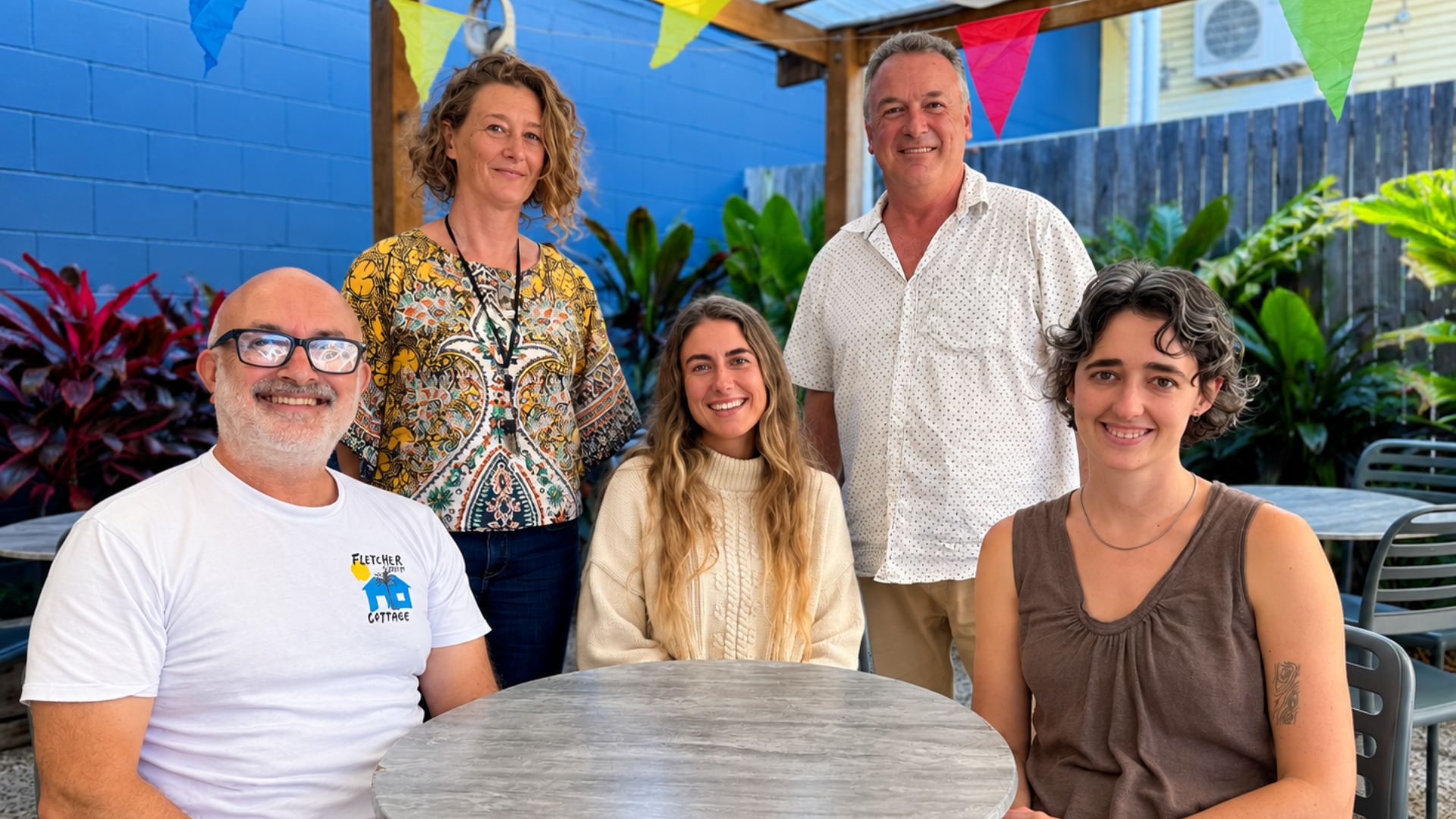
Shanti (Grants & Projects Manager), Tracey and Kate (One Bridge), Suzanne (Community Support Worker) and Nadia (Mullumbimby Women's Resource Service)


.jpg)

.jpg)